How to Learn Crypto Before You Invest (and Why It Pays Off)
Most crypto losses start with buying what you don't understand. Why it pays to learn crypto first, the four classic beginner mistakes, and how to start.
Here's an uncomfortable truth: most people who lose money in crypto don't lose it to bad luck. They lose it in three steps. They buy something they don't understand, hold it without a plan, and sell in a panic when the price drops.
Every one of those steps is a knowledge gap. And knowledge gaps are the one crypto risk you can fix before you spend a cent. Here's why it pays to learn crypto first, what to learn, and the easiest way to start.
Crypto moves faster than you can read about it
Prices can jump or crash within hours. Rumors spread on social media before anyone checks them, and prices react to headlines and to other people's reactions.
When you don't know the basics, every move looks like a signal, so you react to all of it. Learning gives you a filter: you know what actually matters for a coin and what's just noise.
The 4 classic beginner mistakes (none are about picking coins)
| Mistake | What learning changes |
|---|---|
| Buying because it's in the news | You check what the coin does before the hype |
| Investing more than you can afford to lose | You set your limit before you buy |
| Panic selling when the price drops | A drop is something you planned for, not a shock |
| Holding long after the reason is gone | You wrote your reason down, so you notice when it breaks |
See the pattern? These are planning and understanding mistakes. That's good news, because planning and understanding can be learned.
What changes when you understand what you hold
When you know what a coin is supposed to do, you can judge whether the news really affects it. When you understand risk, a 40% drop is uncomfortable but expected. When you have a written plan, you can stick to it while your feelings scream otherwise.
Learning doesn't remove risk: well-understood coins can still fall hard. What it changes is how you respond, and over time that often matters more than what you bought first.
The hidden cost of skipping it
- Time: hours of checking charts and reading posts without knowing what to look for.
- Money: extra fees, rushed trades, and schemes that promise easy returns.
- Confidence: after one bad experience, many people quit crypto for good.
Learning costs less than any of these, and it's the one cost you fully control.
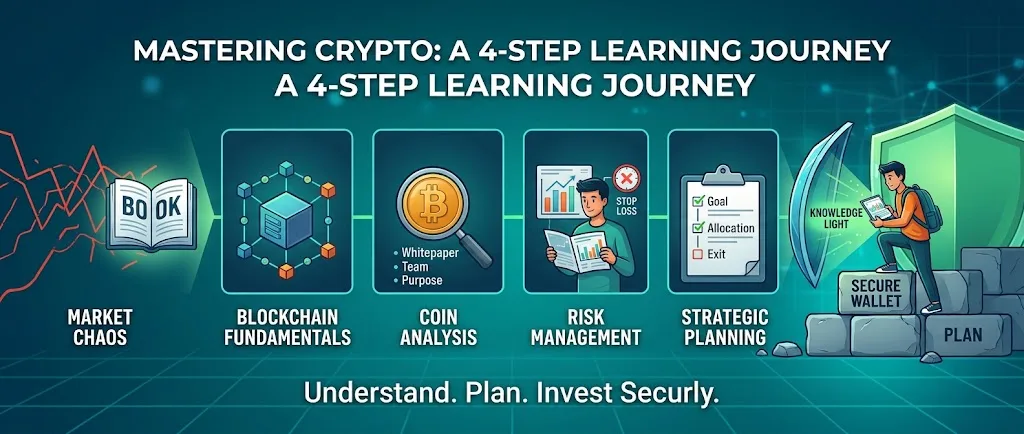
How to learn crypto: the 4 things to learn first
You don't need to know everything. Start here:
- What crypto is and how a blockchain works, in plain language.
- How to judge a coin: what it claims to do and who's behind it.
- The main risks: price swings, scams and losing access to your wallet.
- How to write a simple plan: how much, how often, and when you'll review it.
Hit a confusing term? Look it up before moving on. The goal is to understand your decisions, not to memorize jargon. For a quick overview of all four, read our crypto investing 101 guide.
Start small and keep learning
You don't have to finish learning before you invest. Many people start with a small amount and learn as they go. Just keep it small enough that a mistake teaches you something without hurting your finances.
The readiness test: can you explain, in your own words, what you're buying and why? If not, keep learning.
The best way to learn crypto: the Stratalla Academy
The Stratalla Academy is built for people who want to understand crypto before they invest. Nine short modules take you from the basics through security, buying safely, risk, planning and doing your own research, with quizzes to check what stuck.
No trading secrets, no promised returns, and the beginner lessons are free. Stratalla never tells you what to buy or when to sell. It helps you build the understanding to decide for yourself.
Related articles
-
 Crypto basics
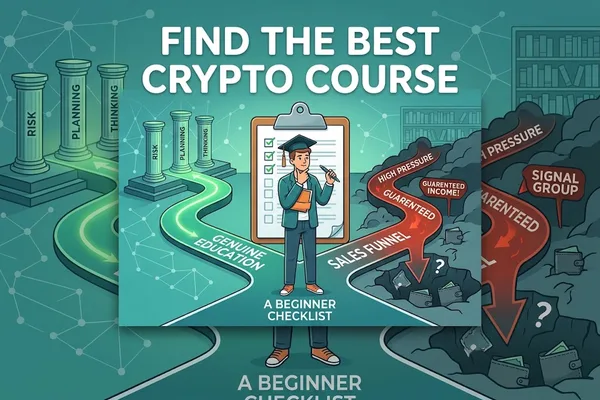
How to Find the Best Crypto Course for Beginners: A Checklist
Crypto courses range from honest education to sales funnels. An 8-point checklist to find the best crypto course for beginners, and the red flags to walk away from.
-
 Crypto basics
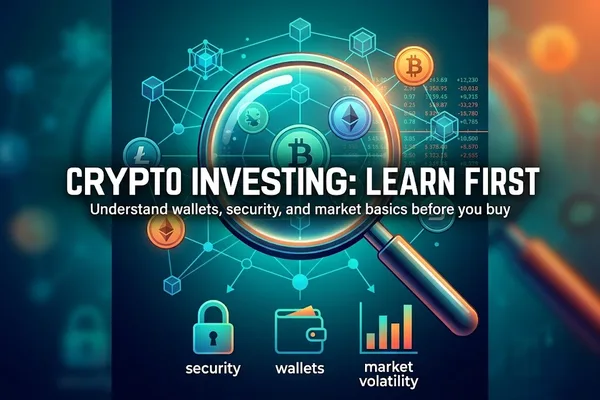
Crypto Investing 101: A Beginner's Guide Before You Buy
A crypto beginners guide: what crypto is, how to judge a coin, the five risks unique to crypto, and a checklist to run before your first purchase.
-
 Crypto basics
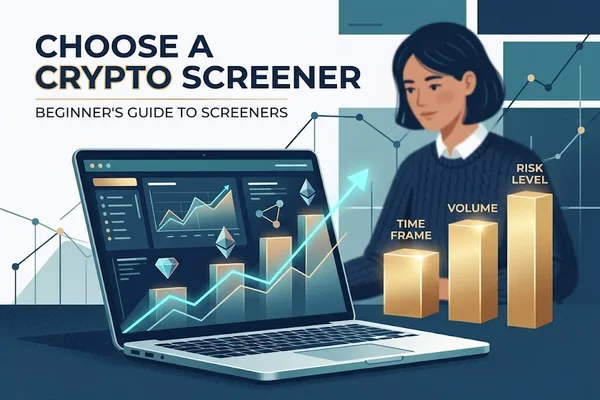
Best Crypto Screener for Beginners: How to Choose and Use One
How to find the best crypto screener: what a screener does, the four numbers that matter, how to use one in six steps, and what beginners should look for.